





If you want to race at the highest level, you need more than good pigeons and a bit of luck. You need control. Darkening racing pigeons to control the moult gives you exactly that. Used in the right way it keeps the wing complete, the feather quality high and the team sharp when the big prizes are on the line.
In this article you get a clear and honest explanation of what the darkening system is, what it does to racing pigeons and how you can apply it in your own loft without losing the natural balance.
What darkening racing pigeons really means
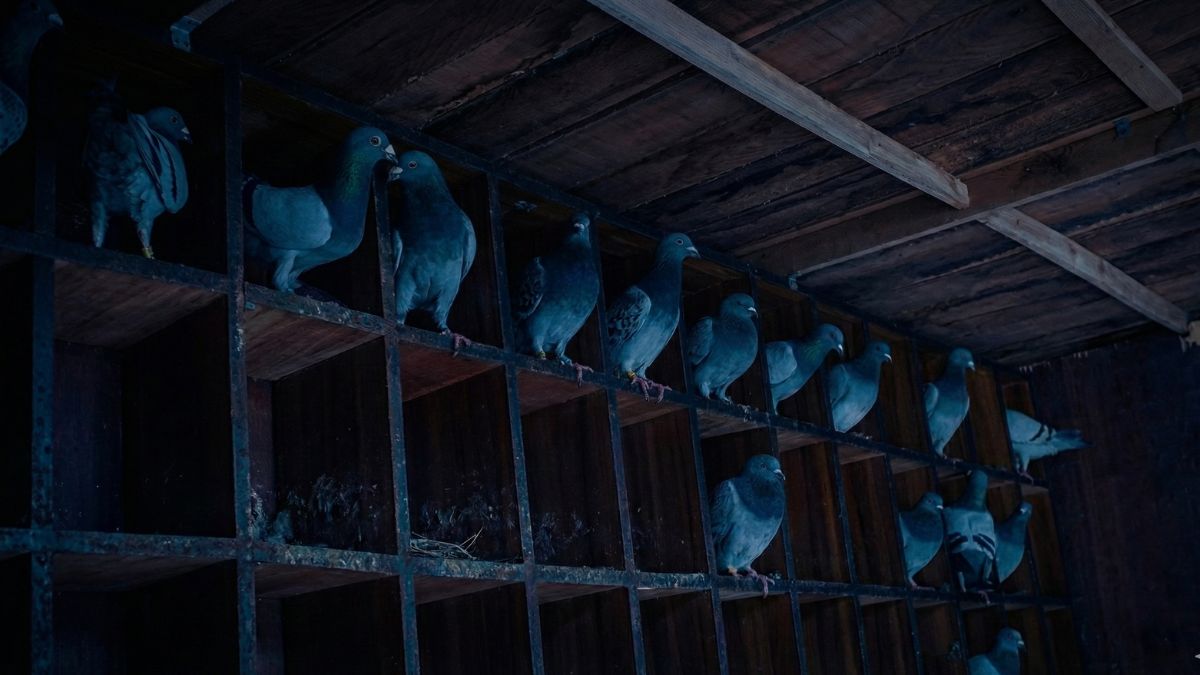
Darkening racing pigeons means that you shorten the day for your birds on purpose. They do not simply follow sunrise and sunset outside. You control how many hours of light they receive by closing the loft for a number of hours and opening it again at fixed times.
In practice many fanciers keep their pigeons in the dark from early evening until the morning. The pigeons then get around ten hours of light and the rest of the time it is dark in the loft. Exact schemes differ from loft to loft, but the key idea is always the same. You manage the light rhythm and therefore the internal yearly rhythm of the pigeons.
Why day length controls moult and form in racing pigeons
For a racing pigeon day length is a powerful signal. The number of light hours tells the body which season it is. Longer days in spring push hormones and breeding drive. The body prepares for a new cycle. Later in the year nature directs the birds into a complete moult and then into a period of rest.
If you keep the days short with a darkening system you send a different message. The body reads it as an earlier season and holds back a full primary feather moult. The pigeon keeps a more complete wing for a longer period. At the same time body feathers are renewed gradually so the pigeons still look smooth and tight in the feather. That combination is ideal when you want top results deep into the season.
Darkening young racing pigeons
Young birds are the group where the darkening system is most common. At many top lofts darkening racing pigeons starts with the first round of youngsters that begin to train around the loft.
The usual pattern looks like this. The youngsters are weaned, they learn the loft surroundings and start to train with confidence. Once they are steady in the air the fancier switches to a darkening schedule. From that point the pigeons receive fewer light hours than outside and the body switches to a different internal timetable.
The effect becomes visible during summer. Naturally managed youngsters often start to drop primary feathers at the time when the important races arrive. Darkened youngsters hold the flight feathers much longer. They still moult body feathers but the wing remains usable and complete. That is a big advantage when you send them to the basket for the tougher races later in the program.
Darkening old racing pigeons
Darkening was first seen mainly at young bird specialists but more and more fanciers now use light management with old birds as well. The aim is simple. Keep the wing complete and plan the peak of form toward the races that really count.
With old birds darkening is usually limited to a shorter period. Some fanciers start shortly after pairing. Others begin around the time of the first training races. During some weeks in spring the loft is dark for part of the day. As a result the heavy moult is delayed and the birds stay on a strong wing when the main events in July and August arrive.
Many lofts report that a few weeks after stopping the darkening system their old birds show a clear boost in form. The natural day length increases. The hormonal system reacts. The pigeons become sharper, more active and more motivated. There is not much formal science on this effect, but the clock results convince a lot of fanciers to keep using the system.
Key benefits of darkening racing pigeons
The reason so many top lofts work with darkening is simple. It brings concrete sporting benefits when handled well.
First, you gain control over the moult. You avoid sending pigeons to an important race with a half moulted wing. On long and demanding races this can be the difference between being in the result sheet and playing for the top.
Second, you lengthen the period in which the same team can compete at a high level. Instead of birds that move deeply into the moult when the best races arrive, you keep a group that still has a complete wing and a clean feather suit. In a sport of small margins that is a major edge.
Third, you can shape the general form curve more deliberately. Darkening racing pigeons does not work alone. It combines with training, feeding and medical control. Together these elements allow you to plan the form build up towards specific weekends instead of hoping that form appears at the right moment by itself.
Risks and responsibilities when you darken racing pigeons
Every system that gives you extra power also demands extra discipline. Darkening racing pigeons is no exception.
The light schedule must be stable. One day dark and the next day forgotten only creates confusion in the loft. Pigeons need rhythm. When the length of the day jumps around all the time, the internal clock cannot settle. That can disturb moult, form and behaviour.
The loft itself must also be ready for darkening. It has to be properly closed against unwanted light but still fresh and well ventilated. A dark loft that is too warm, too damp or too low in oxygen is a health risk. Good climate comes first. Darkening is only a useful tool when the basics are correct.
In the sport there is discussion about stress and health in young birds under heavy management. Some fanciers feel that youngsters which are darkened and later also put under light programs are more sensitive. There is no simple proof for that, but it is clear that any intensive system raises the bar for hygiene, feeding and general care. If you decide to work with darkening, you must keep the overall management at a high level.
Different visions inside pigeon sport
Not every successful fancier uses darkening. Some top lofts choose to race their pigeons under natural day length. They accept that the moult sets in when nature decides and they select only pigeons that still perform under those conditions. For them this is part of their philosophy.
Other fanciers go all in on systems like darkening and later lighting. They see it as a professional use of natural mechanisms and a normal part of modern sport. Both visions exist side by side and both can bring success. This diversity keeps pigeon racing interesting and gives new fanciers different paths to choose from.
Is darkening racing pigeons the right choice for your loft
The key question for you as a fancier is simple. Does darkening fit your goals and your situation.
If you race only a short young bird program and your main focus is on long distance or marathon with old pigeons, the benefit of darkening may be limited. If you want to compete for top results during a full young bird season or you want old birds in top form for specific classic races, darkening racing pigeons can become an important pillar of your loft management.
Whatever you decide, treat it as a complete system. Choose a clear light schedule that you can realistically maintain. Check that your loft can be darkened without losing fresh air. Watch your pigeons closely. Look at training behaviour, homecoming, body condition and moult. Keep written records so you can improve and fine tune your system from season to season.
Conclusion From The Pigeon Boss
Darkening racing pigeons to control the moult for peak race performance
Darkening racing pigeons to control the moult is one of the clearest examples of how modern pigeon sport uses knowledge and planning to raise the level. You are not fighting nature. You are working with natural reactions to light in a controlled way. The result is better timing of the moult, protection of the wing in the most important months and a better chance to hit peak form when the big races are flown.
Used with respect for the pigeons and combined with good loft climate, careful feeding and honest medical care, the darkening system is a strong tool. It shows the outside world that serious fanciers think in terms of welfare and performance together.
For now you have the full picture of what darkening racing pigeons means and what it can do. The next step is yours. Study your race program, look at your loft and decide if darkening is the missing piece in your road map to better results.
Jan de Wijs
The Pigeon Boss