

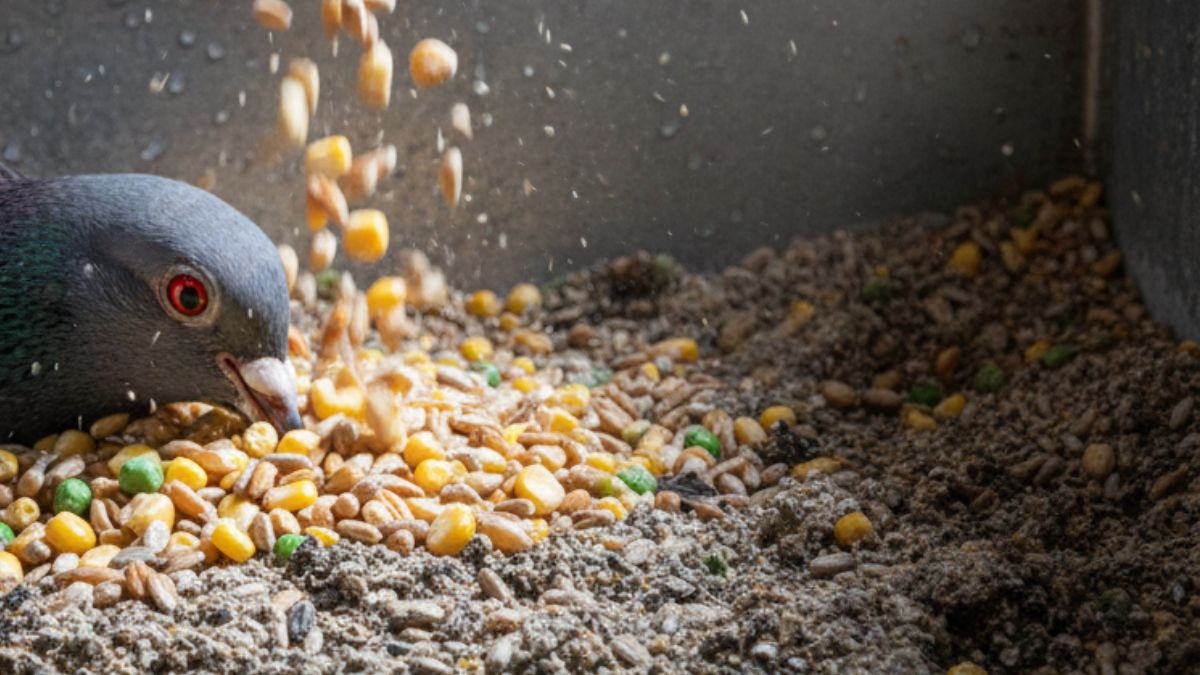
Let us be honest, we have all done it at some point. The bag of feed is almost empty, there is a layer of a few inches left at the bottom of the bin, and we think: “Oh well, it will just mix with the new bag.” You pour those fresh, golden grains on top of the old residue and you think you are good to go. But did you know that at that moment, you are placing a ticking time bomb in your loft?
As the Pigeon Boss, I am taking you today into the dark corners of the feed bin. It might seem innocent, but that last layer of feed is a breeding ground for trouble that can mercilessly ruin your sporting ambitions.
The Invisible Enemy: Molds and Mycotoxins
Feed is a natural product. It lives, it breathes, and it attracts moisture. At the bottom of a sealed bin, ventilation is practically zero. Due to temperature differences, minuscule condensation forms on the walls and sinks to the bottom. This creates the perfect climate for molds like Aspergillus and Penicillium.
The danger is not even just the mold itself, but the mycotoxins they secrete. These are toxic substances that heavily burden the liver of your pigeons. A pigeon with a burdened liver will never fly fast. You cannot see it from the outside, but the engine is running at half power. The result? Your pigeons fall just that little bit short in the final kilometers of the race.
The Dust That Lives: The Flour Mite
Have you ever seen that grayish dust at the bottom of your bin? Look very closely. If that dust seems to move, you have a problem. That is when you are dealing with Acarus siro, also known as the flour mite. These microscopic parasites love the germ of the grain, exactly where most of the vitamins are stored.
When your pigeons eat this, they not only ingest fewer nutrients, but they can also suffer from intestinal inflammation and allergic reactions. A pigeon constantly fighting a mild infection has no energy left to deliver a top performance.
Rancid Fats and Vitamin Loss
As soon as grain is crushed or damaged, it comes into contact with oxygen. Fats in the seeds begin to oxidize. This is called rancidity. That old layer of feed at the bottom of the bin is weeks, sometimes months old. The Vitamin E and Vitamin A have long since vanished. By throwing fresh feed on top of old feed, you contaminate the new supply with these oxidation processes. It is like frying a fresh steak in oil that has been in the pan for three weeks. You would not do that to yourself, so why to your champions?
The Pigeon Boss Hygiene Check
So how do we do it correctly? Very simple. We work according to the FIFO principle: First In, First Out. But with a hard stop.
Step 1:
Empty the bin completely. No exceptions.Step 2:
Take a dry cloth and wipe out the dust residues from the corners and seams. Avoid using water, because every drop of remaining moisture is an invitation for new molds.Step 3:
Smell your empty bin. Does it smell musty? Then it is time for a thorough disinfection and a day in full sun as UV light kills many spores. Step 4: Only when the bin is sparkling clean and bone dry do you put the new bag in.
Passion for Perfection
Pigeon racing is a sport of details. The fanciers who consistently stand at the top of the results leave nothing to chance. A clean feed bin might seem like a small thing, but it is the foundation of a healthy colony.
Enjoy your pigeons, treat them like the athletes they are, and make sure that feed bin shines. Because only with top quality fuel will you get those rockets home on time!
Until the next tip,
Jan de Wijs
The Pigeon Boss