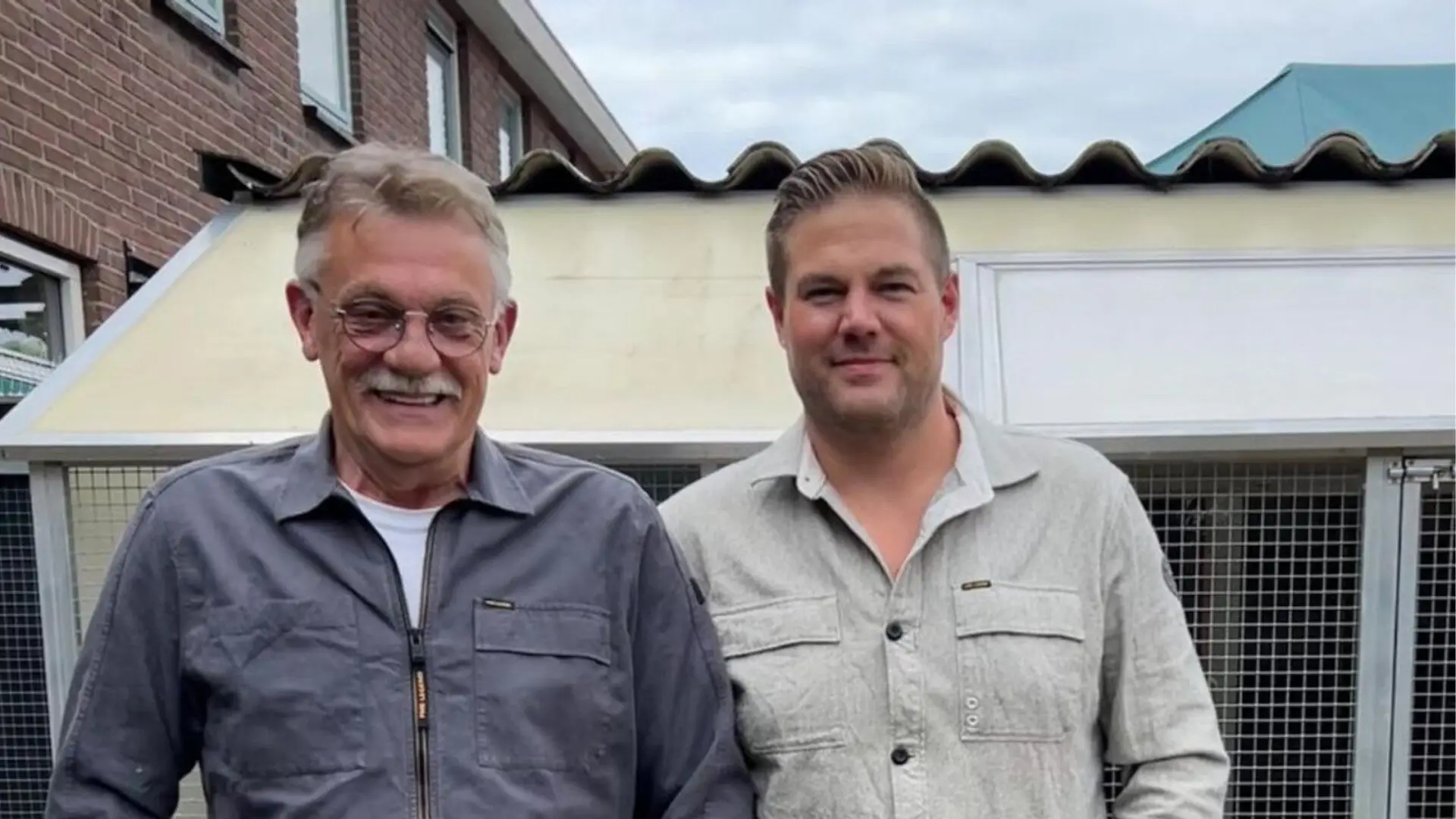




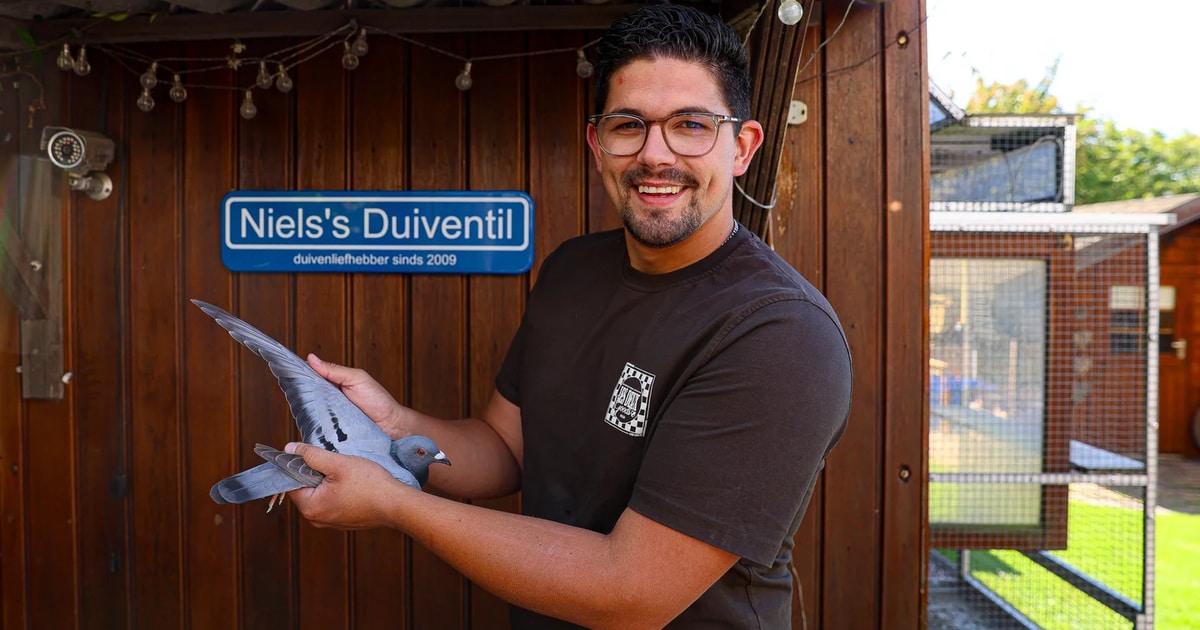
At just 26 years old, Dutch racing pigeon fancier Niels den Dunnen from Hoornaar has achieved a magnificent national victory. On 1 August 2026, his pigeon claimed 1st National Orléans against 9,264 pigeons entered by 1,025 competitors.
A brilliant achievement for a young fancier who is not only making his mark at the highest level of pigeon racing but also helping to give the sport a fresh and exciting image.
There are victories that stand out because of the numbers, and there are victories that tell a much bigger story. For Niels den Dunnen, his national triumph from Orléans is both.
Competing against established names and highly experienced lofts, Niels demonstrated that age is no barrier to success in modern pigeon racing. Passion, commitment, quality pigeons and daily dedication can take a fancier all the way to the top.
And in Hoornaar, that is exactly what happened.
1st National Orléans: A Victory to Remember
Saturday, 1 August 2026, will be a date Niels den Dunnen remembers for a very long time.
The pigeons competing in the national Orléans race were liberated at 07:30 in France. A total of 9,264 pigeons from 1,025 participating fanciers were competing for national honours.
For Niels, the official racing distance to his loft in Hoornaar was 505.324 kilometres.
At 14:14:57, his first pigeon was registered at the loft. With an official velocity of 1,247.862 metres per minute, equivalent to approximately 74.87 kilometres per hour, the performance was good enough to secure the ultimate prize.
1st National Orléans against 9,264 pigeons.
The winning pigeon, carrying ring number NL25-1289130, was listed as his third nominated bird on the result sheet.
That detail makes the victory particularly interesting. Niels had entered ten pigeons for the race, and it was his third nominated pigeon that delivered the national triumph.
The result also showed impressive depth within his team, with seven prizes from ten entered pigeons.
Winning the national race is exceptional. Achieving a 70% prize percentage on the same flight adds another dimension to the performance.
Claim Your UltimatePigeon Boss Supply Plan
Want to dominate the races weekly with absolute top form? Enter your email to instantly receive the weekly feeding and supplement schedule by The Pigeon Boss to maximize recovery, boost metabolism, and keep the gut microbiome in champion condition.
THANKS!Your plan is on its way
Check your inbox! Your ultimate supply plan is on its way.
We’ve sent the complete weekly feeding and supplement schedule to your email address. Make sure to check your spam folder or promotions tab if it doesn't show up within a few minutes.
Beating Some of the Biggest Names in Dutch Pigeon Racing
The strength of this national victory becomes even clearer when looking at the competition.
Finishing second nationally were G. & S. Verkerk from Reeuwijk, recording 1,245.972 metres per minute. Third place went to C. Broekhuisen from Gouda with 1,244.568 metres per minute.
Fourth national was Comb. van Leeuwen & Son from Reeuwijk, followed by Combinatie Lin from Rijnsaterwoude in fifth position.
National position | Fancier | Velocity |
1 | Niels den Dunnen | 1,247.862 m/min |
2 | 1,245.972 m/min | |
3 | C. Broekhuisen | 1,244.568 m/min |
4 | 1,244.306 m/min | |
5 | Combinatie Lin | 1,244.100 m/min |
The difference between first and second was just 1.890 metres per minute.
At this level, every detail matters. A pigeon must have the physical condition, orientation and determination to maintain a competitive pace over hundreds of kilometres. The fancier must prepare the bird to arrive at the starting point in excellent condition.
The national result shows just how competitive the top positions were.
And on this particular Saturday, nobody could match the official winning velocity of Niels den Dunnen.
Seven Prizes From Ten Pigeons
While the national victory naturally takes the headlines, the performance of the complete racing team deserves attention.
Niels entered ten pigeons for the Orléans race and won seven prizes.
His submitted individual result overview recorded national positions 1, 264, 416, 582, 918, 1,412 and 2,983. These placings demonstrate that the performance was not limited to one exceptional arrival.
For serious pigeon fanciers, this is an important distinction.
A national winner can create a memorable moment. A loft that also delivers a high proportion of prize winners shows the value of consistent preparation and a competitive racing team.
Of course, one race alone cannot establish the overall quality of an entire season. Nevertheless, seven prizes from ten entries is a result that any ambitious fancier would be delighted to achieve.
From Four Pigeons to National Glory
What makes the story of Niels den Dunnen particularly appealing is how his passion for pigeon racing began.
According to an interview published by Dutch regional newspaper Het Kontakt in August 2026, Niels first became interested in pigeons when he was just six years old.
His father was involved in transporting racing pigeons, allowing young Niels to become familiar with the birds and the sport.
At nine years old, he received his first four pigeons.
Those four pigeons marked the beginning of a passion that would eventually develop into a serious competitive pursuit.
Like many young fanciers, he was initially fascinated by the simple experience of releasing pigeons and watching them find their way home.
Over time, that fascination developed into an interest in racing, breeding, training and improving performance.
Today, the young fancier from Hoornaar has developed into one of the notable competitors in Dutch pigeon racing.
His journey illustrates something important about the sport. Every successful loft has a beginning, and sometimes that beginning is no more than a few pigeons and a young enthusiast who wants to learn.
Around 150 Pigeons and Four Hours of Daily Dedication
Behind a national victory lies a tremendous amount of work.
In the Het Kontakt interview, Niels explained that he cares for approximately 150 pigeons and spends around four hours each day working with them.
Alongside his professional activities in the animal feed sector, his daily routine involves feeding, training, cleaning, observing and managing his birds.
That commitment is familiar to dedicated racing pigeon enthusiasts around the world.
Successful pigeon racing is not simply about releasing birds on Saturday morning and hoping for a good result.
It requires attention throughout the week.
Pigeons need suitable nutrition, a healthy environment, regular exercise and careful management. Their condition and behaviour must be monitored, while the fancier must recognise when something is not quite right.
Niels places considerable importance on routine and consistency.
The relationship between a fancier and the pigeons is built through daily care, and this approach forms an important part of his philosophy.
His national victory offers an excellent example of how commitment to the birds can be rewarded in competition.
Success Beyond the National Orléans Victory
The Orléans triumph is not the only achievement that has attracted attention to Niels den Dunnen.
In the same August 2026 interview, Het Kontakt reported that one of his pigeons had been recognised as the best day long distance pigeon in the Netherlands.
According to the newspaper, that pigeon achieved four outstanding classifications during the season, including two first prizes in semi national competition.
These are significant achievements in a demanding racing category.
Day long distance racing requires pigeons to perform over substantial distances, often between approximately 500 and 750 kilometres.
The birds must combine endurance, navigational ability and the capacity to maintain their performance throughout a long flight.
Repeated top results are particularly valuable because they demonstrate that a pigeon can deliver at a high level on more than one occasion.
The newspaper also reported that the exceptional pigeon subsequently attracted major interest and was sold for a six figure sum.
Despite the commercial interest, Niels wanted the pigeon to remain in the Netherlands.
That decision says something about his attachment to the birds and his connection with Dutch pigeon racing.
For him, the sport is clearly about more than financial value or winning trophies.
It is also about the pigeons themselves.
A Young Champion Challenging the Image of Pigeon Racing
One of the most interesting aspects of Niels den Dunnen’s story is his determination to change how people perceive pigeon racing.
The sport has a rich history and an enormously dedicated community, but it also faces challenges.
In many countries, the average age of active fanciers is increasing, and younger generations are not always familiar with what competitive pigeon racing involves.
Niels wants to help change that perception.
In his interview with Het Kontakt, he explained that pigeon racing is considerably more competitive and demanding than many outsiders realise.
And he has a point.
Modern pigeon racing combines animal care, breeding knowledge, nutrition, physical conditioning, competition management and an understanding of how individual birds respond to training.
There is also a remarkable emotional element.
A fancier can spend months preparing pigeons for a particular race, yet the outcome remains uncertain until the birds return home.
That combination of preparation, anticipation and competition makes pigeon racing unlike almost any other sport.
When a young fancier such as Niels achieves a national victory, it provides a powerful opportunity to introduce that excitement to a wider audience.
The Importance of the Next Generation
Every sport needs new participants, new ideas and people who are willing to share their enthusiasm.
Pigeon racing is no exception.
Young fanciers bring fresh energy and different perspectives, while experienced competitors provide generations of practical knowledge.
Both are essential for the future.
The success of Niels den Dunnen demonstrates that young people can compete successfully against experienced and established lofts.
It also shows that pigeon racing offers opportunities for those willing to invest time, patience and dedication.
There is no shortcut to understanding pigeons. Experience develops through observation, learning from mistakes and recognising the individual qualities of the birds.
That is precisely what makes the sport so rewarding.
A national victory is the result everyone dreams about, but the real satisfaction begins long before the winning pigeon arrives.
It begins with caring for the birds every day.
A National Victory With a Bigger Meaning
On 1 August 2026, Niels den Dunnen achieved something that thousands of pigeon fanciers dream of accomplishing.
He won 1st National Orléans against 9,264 pigeons.
His winning pigeon, NL25-1289130, covered 505.324 kilometres at an official speed of 1,247.862 metres per minute, securing the highest position in the national classification.
With seven prizes from ten entries, the loft also demonstrated an impressive team performance.
But perhaps the most encouraging aspect of this achievement is the person behind it.
At just 26 years old, Niels represents a new generation of enthusiastic and ambitious pigeon fanciers who are determined to succeed while sharing their passion with others.
From four pigeons as a young boy to standing at the top of a national result sheet, his journey is an inspiration to both established competitors and newcomers.
Congratulations, Niels den Dunnen, on a magnificent national victory!
At Pigeon Boss, we love seeing performances like this. They celebrate the extraordinary abilities of racing pigeons, the dedication of their fanciers and the competitive spirit that makes our sport so special.
And if stories like this encourage even one young person to discover the world of racing pigeons, that is another victory worth celebrating.
Jan de Wijs
The Pigeon Boss