




There are victories that look impressive on a result sheet, and then there are victories that become even more impressive once you know the man behind them.
Harry Hendriks of Vinkeveen belongs firmly in the second category. On 29 June 2026, Hendriks won the Bergerac race of Fondclub Noord Holland, flown from Libourne, with his two year old hen NL.24 8301542. She covered 913.726 kilometres and recorded an official velocity of 992.468 metres per minute to take first prize against 393 pigeons.
On its own, that is already a result worth celebrating. But this is Harry Hendriks. A fancier who says he has been involved in racing pigeons since 1975, who gradually moved deeper into the long distance and marathon disciplines, and who has spent decades building a loft around the races that test both pigeon and fancier to the limit. More than fifty years after entering the sport, he is still capable of putting a pigeon at the very top of the result. That is what makes Bergerac 2026 more than another line on a long record. It is proof that Harry Hendriks is still very much in the game.
Bergerac Belonged to Harry
The official result leaves little room for discussion. Hendriks entered nine pigeons and his first arrival, NL.24 8301542, won the race. His second pigeon, NL.24-8301518, followed in 7th position. A third Hendriks pigeon was classified 75th, giving him three prizes from his team of nine.
That first arrival was also well clear on velocity. Hendriks recorded 992.468 metres per minute, while the pigeon in second position recorded 906.798 metres per minute. On a marathon style race, that kind of separation immediately catches the eye.
It was not simply a one pigeon flash either. His 7th place reinforced the quality of the performance, while the overall standings after three races also show Hendriks in 9th position in the Keizer championship with 2364.700 points. His A26 score was the maximum 1000.0 points.
For followers who only see Harry’s name occasionally, this result might feel like the sudden appearance of another strong Dutch marathon fancier. For people who know his history, it feels very different. This is another chapter in a career built around the hardest work in pigeon racing.
Champions Demand the Best. So Do We.
Discover the essential supplies for winning lofts, personally tested, trusted and recommended by Pigeon Boss. Because excellence starts with the right products.
-

Berger Powder No.1
Active supplement with probiotics, prebiotics, colostrum, vitamins, chelates, and...€ 49,95Add to cart -

Vital Drink
Herbal liquid supplement with milk thistle, sea buckthorn, elderberry...€ 29,95Add to cart -
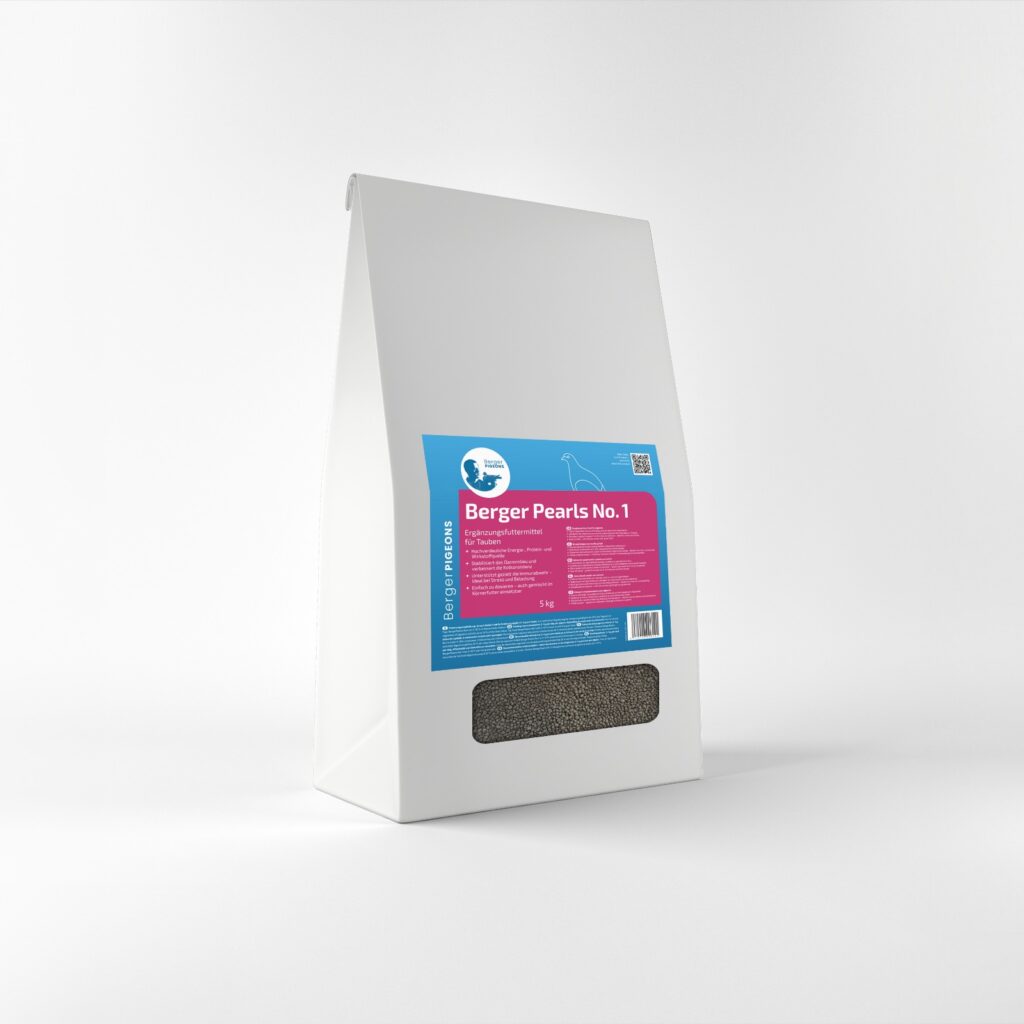
Berger Pearls No.1
Chopped peanut cores with probiotics, prebiotics, colostrum, vitamins and...€ 59,95Add to cart

A Marathon Fancier Since the Seventies
According to Hendriks’ own background information, he started with pigeons in 1975, initially together with his brother. During the 1980s his attention moved increasingly towards the long distance and overnight races. That direction would eventually define him.
His original family of pigeons was built around traditional marathon blood, including Van Wanroy, Van der Wegen and Gebroeders Kuijpers. Over the years he continued to introduce new pigeons, including birds connected to Michel Verweij and Peter de Haan, Richard van den Berg and Tim Hage. Around 2013, he describes making a conscious decision to inject more speed into his existing marathon family by bringing in eggs from Tim Hage and crossing those pigeons into his established long distance base.
That detail matters because it says something about Harry Hendriks as a fancier. His story is not only about preserving old lines and admiring what worked thirty years ago. It is about adapting. Marathon racing changes, competition changes and the pigeons themselves need to keep evolving. The Bergerac winner of 2026 sits at the modern end of a loft that has been shaped over decades.
Marseille Runs Through His Story
If Bergerac is the headline today, Marseille has been one of the great recurring themes in the Hendriks story.
On his own historical pages, Hendriks describes the famous NL88 1560907, his Marseille hen. According to Harry’s account, she won 1st Marseille in Fondclub Amsterdam in 1990 with a remarkable advantage. Decades later, Marseille would return to the story again.
In 2019, Hendriks won Marseille in Fondunie 2000. His pigeon was clocked at 20.57 after a race of roughly 991 kilometres. The same report listed him as 16th National Marseille against 2,735 pigeons.
Other later performances continued to reinforce the connection between Hendriks and the marathon classics. Pigeoncom has even presented him under the nickname “Mister Marseille”, although that description should be understood as their editorial characterisation rather than an official title.
The interesting part is not the nickname. It is the continuity. Different decades, different pigeons, different versions of the sport, but the same type of races keep appearing.
And now Bergerac can be added to that line again.
Claim Your UltimatePigeon Boss Supply Plan
Want to dominate the races weekly with absolute top form? Enter your email to instantly receive the weekly feeding and supplement schedule by The Pigeon Boss to maximize recovery, boost metabolism, and keep the gut microbiome in champion condition.
THANKS!Your plan is on its way
Check your inbox! Your ultimate supply plan is on its way.
We’ve sent the complete weekly feeding and supplement schedule to your email address. Make sure to check your spam folder or promotions tab if it doesn't show up within a few minutes.
A Simple System Built for Hard Racing
Hendriks’ own description of his racing system is refreshingly straightforward. His racers are played on the nest, and before they are asked to compete on the major overnight races, he wants substantial kilometres in their wings. He describes roughly 1,500 to 2,000 kilometres of preparation before a pigeon is sent to one of the serious marathon assignments.
From around the middle of May, his pigeons train twice a day around the loft. For the important marathon races, pigeons may be sent while sitting approximately ten days on eggs or when feeding small youngsters.
There is nothing particularly theatrical about that approach. It is based on preparation, condition, experience and timing. That simplicity is part of what makes the Hendriks story appealing. The glamour comes on race day. The work that creates it happens quietly for months.
His location adds another layer to that image. Older reports describe his lofts in the area around Vinkeveen and the Vinkeveense Plassen, in a natural setting where even basic daily routines required commitment. A 2016 report noted that there was no running water at the lofts, meaning water and supplies had to be brought in.
For a marathon fancier, that almost feels appropriate. Nothing comes without effort.
Still Winning More Than Fifty Years Later
Perhaps the most important thing about Bergerac 2026 is what it says about longevity.
Pigeon sport has a wonderful habit of rewarding experience while never guaranteeing anything. You can know the birds, understand the weather, have decades of results behind your name and still be beaten the following weekend. That uncertainty is exactly why a new victory remains meaningful, no matter how many years somebody has already been racing.
Harry Hendriks began in 1975. In 2026, he is still winning.
The official Bergerac result also shows that this was not achieved with a huge army of pigeons. Nine were entered. One won. Another finished 7th. Three made the prizes.
That is the kind of performance that deserves attention because it connects the past and present of our sport. Hendriks represents a generation of fanciers carrying enormous practical knowledge, but Bergerac proves that we should not only talk about what they achieved years ago. Some of them are still writing the next chapter right now.
Bergerac 2026 Is the Result That Brings the Story Together
It would be easy to write about Harry Hendriks by looking backwards. There is enough history. There are classic marathon races, championships, famous pigeons and decades of experience.
But that would miss the best part.
The reason Pigeon Boss is talking about Harry Hendriks now is not nostalgia. It is because on 29 June 2026 his NL24 8301542 was the fastest pigeon in the Fondclub Noord Holland Bergerac result.
- First prize.
- 913.726 kilometres.
- 992.468 metres per minute.
And behind that pigeon stands a man who has been learning, selecting, racing and adapting for more than half a century.
That is what makes this victory such a good advertisement for pigeon racing. Our sport has room for innovation and young ambition, but it also rewards patience, accumulated knowledge and the ability to keep improving year after year.
Harry Hendriks has been doing exactly that for a very long time.
And Bergerac 2026 proves he is not finished yet.
Jan de Wijs
The Pigeon Boss