







A Pigeon Boss Analysis on Losses, Overcrowding and Responsibility
Young pigeon racing in Europe is once again under the microscope. In Belgium, Germany and beyond, discussions are heating up about distances, weather limits and race structure. That debate is healthy. Necessary even. But let us be very clear from the start. Adjusting race programs alone will not solve the problem.
Young pigeons should absolutely be raced with common sense. But the uncomfortable truth is this. The biggest cause of massive losses is not the racepoint. It is what happens in the loft long before basketing.
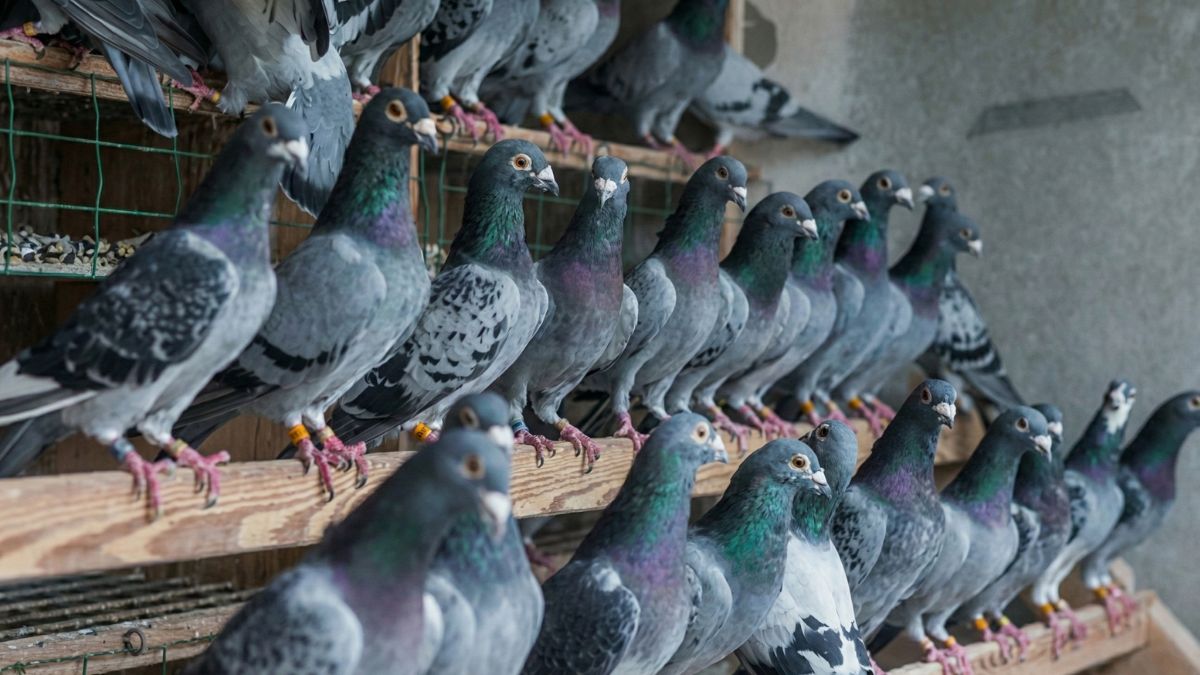
Overcrowding Is the Silent Killer
The modern trend is painfully obvious. Losses go up. Fear follows. And instead of correcting the root cause, many fanciers respond by breeding more youngsters the following season. More numbers. More backup. More hope.
That logic is understandable. But biologically and sportively it is disastrous.
Too many young pigeons on a loft means
constant infection pressure
compromised immunity
poor recovery
chronic stress
From a health perspective you are already starting the season five nil behind. No feeding system, supplement or motivation trick can compensate for that.
A pigeon that is not in optimal health will get lost. Not maybe. Not sometimes. Automatically.
Losses Are Often a Loft Problem, Not a Sky Problem
This is where the discussion becomes uncomfortable, but honesty matters if we care about the sport.
Yes, weather plays a role.
Yes, young pigeons need a smarter build up.
Yes, federations must be willing to adapt structures.
But it is too easy to point fingers only upward.
When lofts are overcrowded, ventilation is insufficient, hygiene becomes reactive instead of preventive, and selection is postponed instead of enforced, losses are inevitable. Blaming the race program at that point is like blaming the road after driving on bald tires.
Structure Must Change, But So Must Mindset
Does the structure of young bird racing need an update. Absolutely.
Shorter learning phases.
Better spacing between races.
Stricter weather boundaries.
Federations such as the KBDB, the Deutscher Brieftaubenverband and the NPO cannot ignore the signals coming from the base of the sport.
But here is the hard truth.
If fanciers do not also take responsibility inside their own lofts, structural changes will only mask the problem, not solve it.
Fewer Pigeons, Better Pigeons, Better Sport
The future of young pigeon racing is not found in bigger numbers. It is found in better management.
Breed fewer youngsters.
Keep only what your loft can truly support.
Select earlier and harder.
Protect health before chasing results.
That requires discipline. And yes, sometimes painful choices. But it is the only sustainable way forward.
Final Word from The Pigeon Boss
Young pigeons must be raced with intelligence, not ego. Losses are not a badge of toughness. They are a warning signal.
Change is needed in race structures. No doubt. But the sport will only truly improve when fanciers also put their hand in their own pocket and their own conscience.
Less overcrowding means healthier pigeons.
Healthier pigeons mean fewer losses.
Fewer losses mean a stronger, more credible duivensport.
And that is something worth fighting for.
Until the next blog,
Jan de Wijs
The Pigeon Boss