






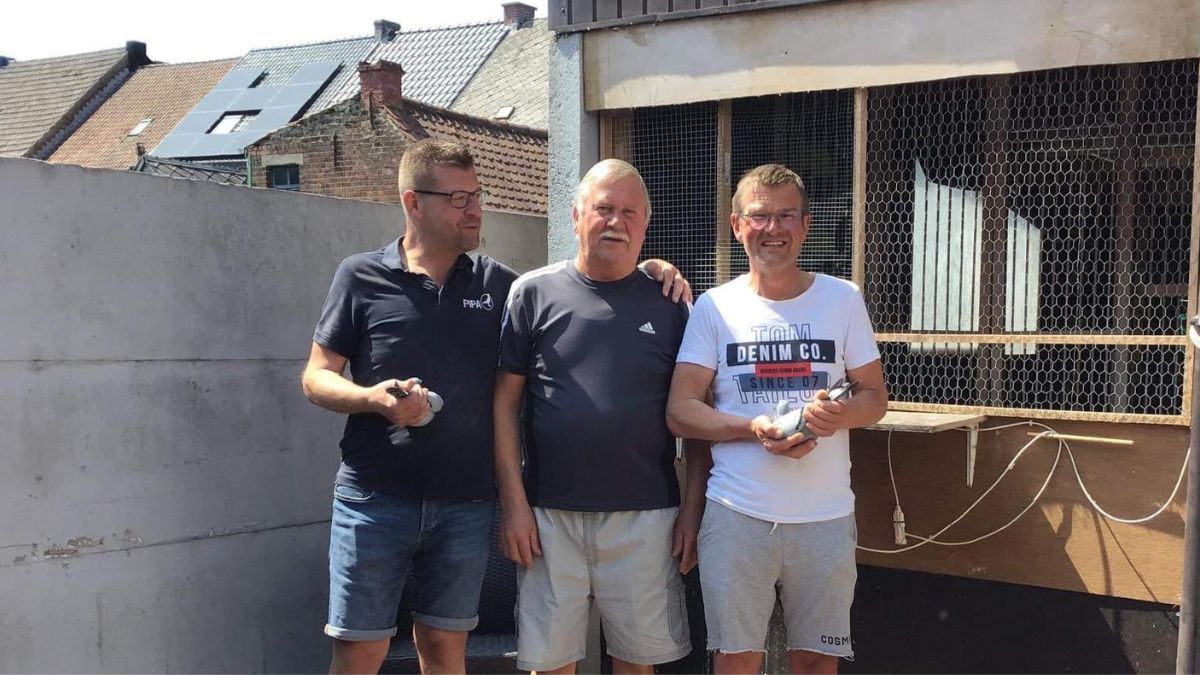
In the competitive landscape of international pigeon racing, certain names emerge not by chance, but through meticulous design. In Balegem, East Flanders, the partnership of Geert and Guy Kennof has established a colony that is currently redefining the standards of the Belgian long distance (dagfond). For those tracking the national KBDB rankings and top-tier race results, the rise of Kennof pigeons represents one of the most significant shifts in the sport over the last five years.
The genetic backbone: The Tom Van Gaver alliance
The success of the Kennof pigeons is inextricably linked to a strategic partnership with Tom Van Gaver of Moortsele. Rather than simply acquiring stock, Geert and Guy have integrated the core of the world-renowned Finn dynasty into their own breeding loft. This genetic foundation has provided the necessary speed and endurance required for the 500 to 800 km range.
The Finn line is celebrated for its explosive speed and the rare ability to compete at the national level week after week. By crossing these lines with their own established base, including the old De Schepper-De Temmerman lines and targeted introductions from Luc Sioen and Vandenheede, the Kennof partnership has engineered a modern racing pigeon. These birds possess the velocity needed for the great middle distance and the stamina required for the demanding long distance circuits.
A proven system: Total widowhood and rigorous selection
The operational side of the Balegem loft is managed with professional precision. Geert and Guy Kennof employ a total widowhood system that demands peak performance from both cocks and hens. This methodology is based on a philosophy of rhythm and routine, mirroring the approach of their mentor, Tom Van Gaver.
The selection process is absolute. The basket is the only judge in Balegem. Pigeons that fail to secure front-row positions in national results are systematically removed to make way for the next generation of Finn descendants. This high-pressure environment ensures that only the most resilient and motivated athletes remain in the racing team.
Record-breaking performance: National and provincial dominance
The transition to long distance racing was a calculated move aimed at fairer races where the quality of the individual bird outweighs wind direction or loft location. The results validate this strategy:
The 474 (BE20-4221474): A cornerstone of the loft, securing 10th Provincial Ace Pigeon KBDB Long Distance and 1st Ace Pigeon Long Distance in the elite EDL Viane union.
Bourges I National: A definitive victory with 1st National Zone against 2,986 pigeons achieved by The Bourges Queen (BE23-4076782).
Souillac 2025: Continued national relevance with a 12th National against 4,234 pigeons.
Poitiers National: An impressive 22nd National against 10,575 pigeons.
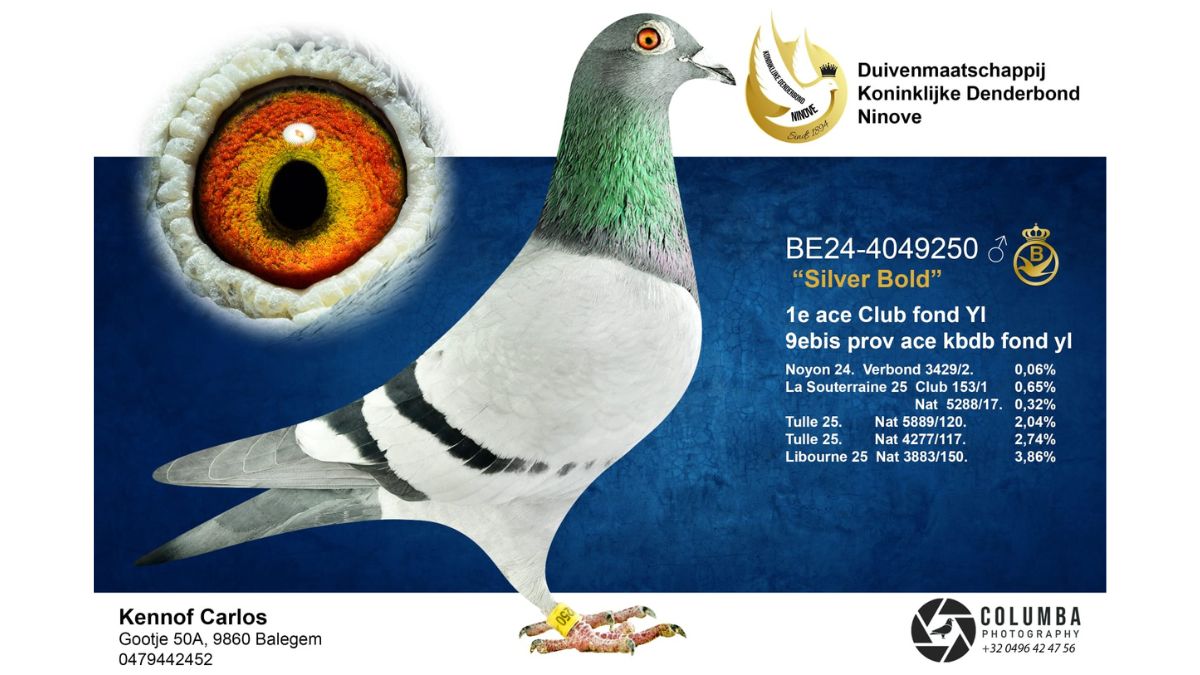
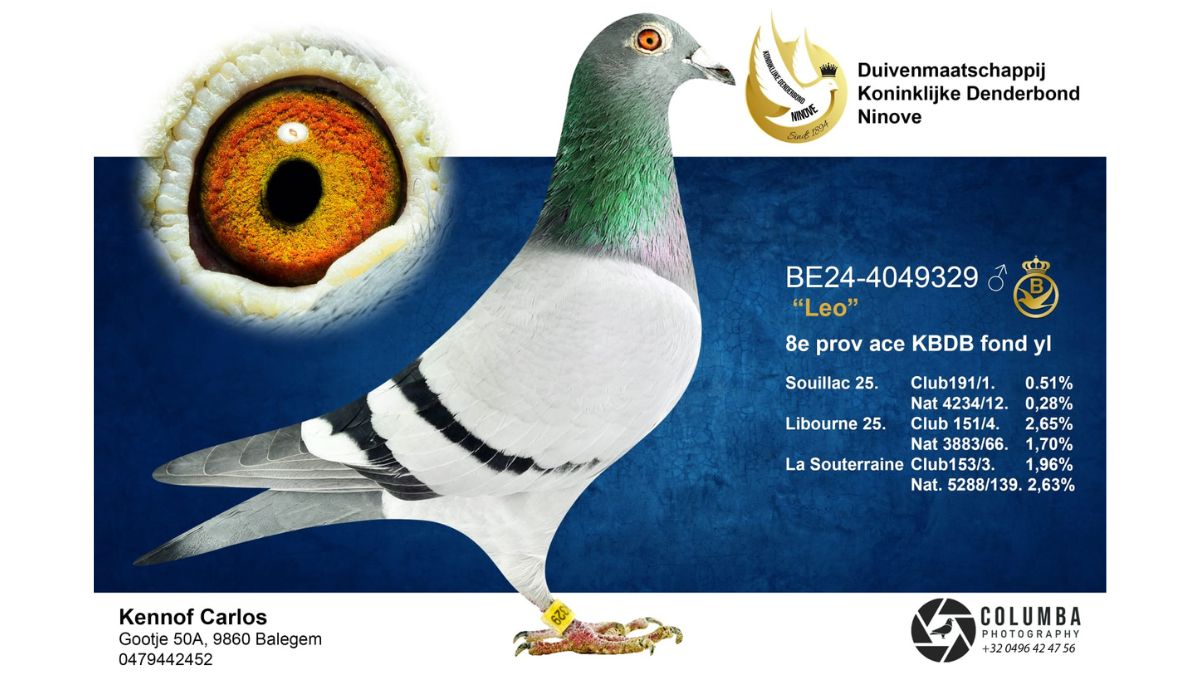
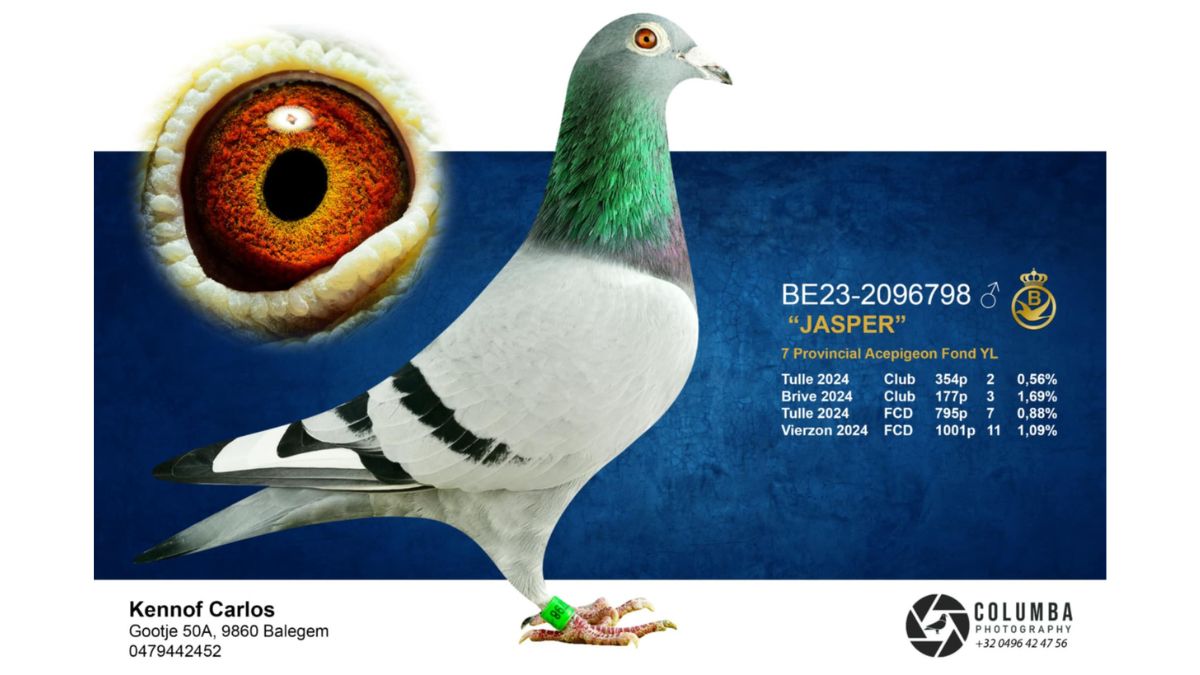
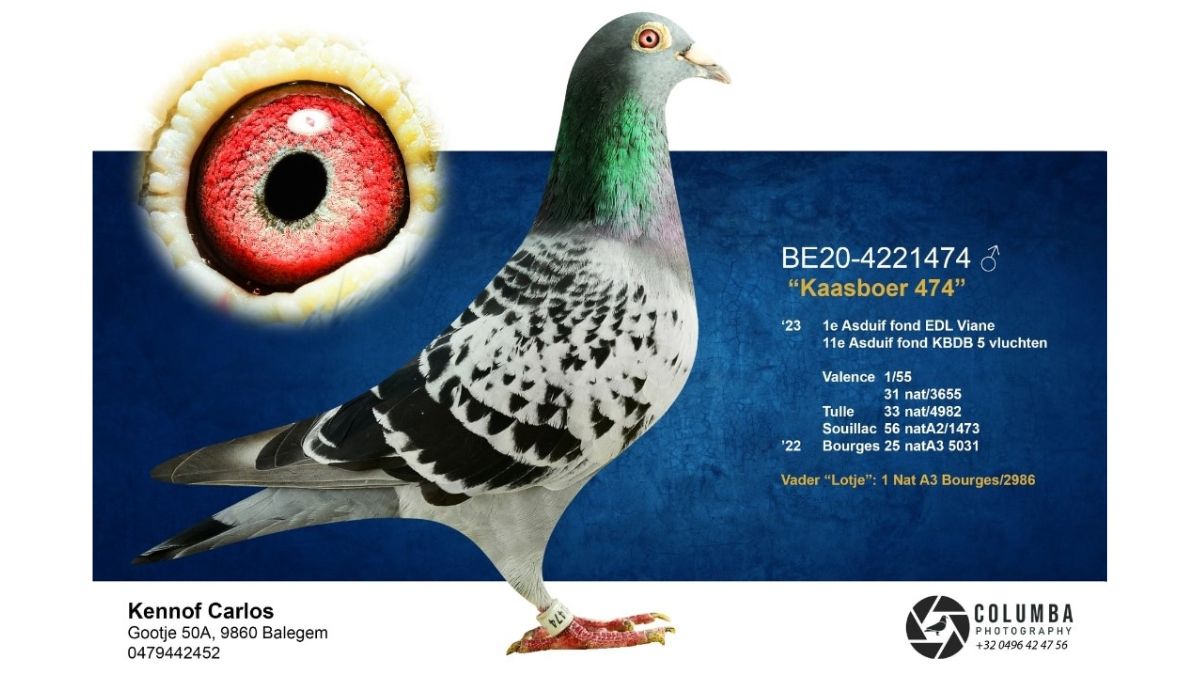
These accolades are earned in the Royal Denderbond Ninove, widely considered the most competitive club in Belgium. Securing the titles of 1st King Long Distance Yearlings and 1st Champion Long Distance in 2025 confirms that the Kennof pigeons are now operating at the pinnacle of the sport.
International reputation and future outlook
The influence of Kennof pigeons is no longer confined to Balegem. Reports of successful references are surfacing globally, with descendants performing at the highest levels in France, China, and the United States. The synergy between the brothers Geert and Guy, combined with the administrative oversight of the younger generation under the name Carlos Kennof, ensures the longevity of this success.
For enthusiasts and investors seeking the cutting edge of Belgian pigeon racing, the Kennof colony represents the successful fusion of elite genetics and master craftsmanship. Their dominance in the 500-800 km category marks them as the primary reference for the future of the Belgian dagfond.
Jan de Wijs
The Pigeon Boss