





Twenty kilometres can teach more than a hundred
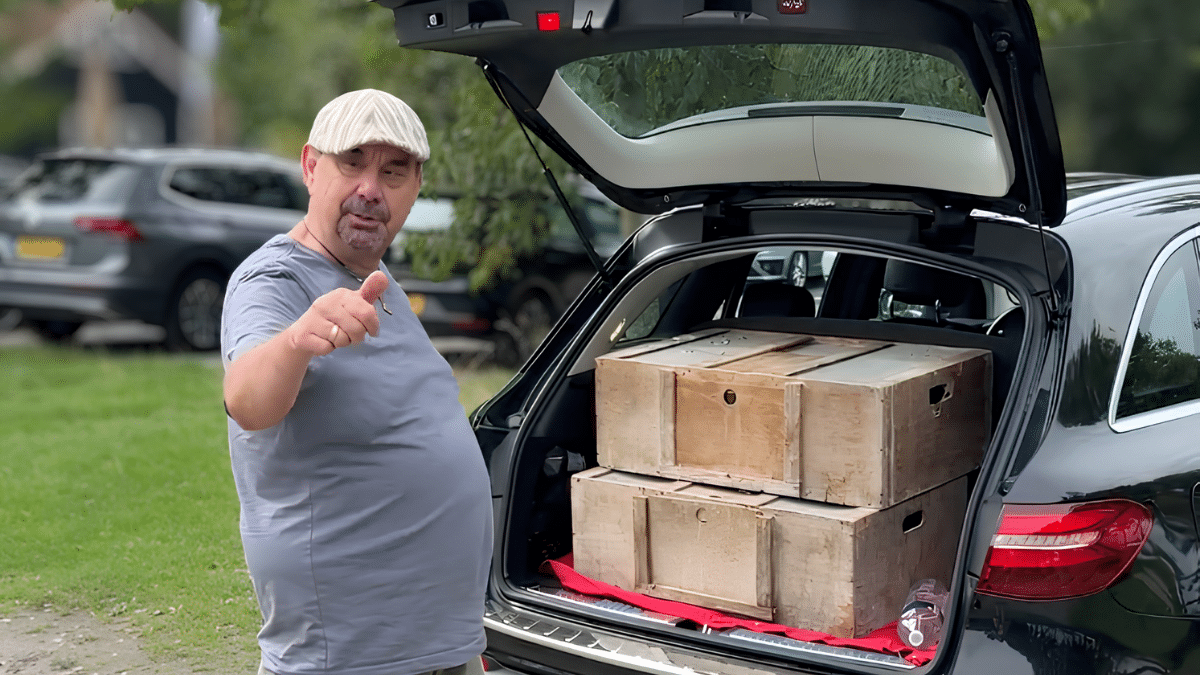
Every pigeon fancier knows the feeling. The baskets are in the car, the youngsters are alert and the road to the release point is filled with expectation. The moment the birds take the sky, their real education begins.
No blackboard. No theory. Just the sky, the landscape, the direction home and the lessons that can only be learned through experience.
I strongly believe in training young pigeons often. That is why I take my inexperienced birds on a weekly training toss, usually from no farther than twenty kilometres from the loft.
I am not trying to exhaust them. I am not interested in impressing anybody with big distances. My goal is to teach them to look, think, decide and return home with growing confidence. Every successful return adds another piece to the map inside the mind of a young pigeon.
Talent gives a pigeon the desire to come home. Education teaches it how to use that talent.
A young pigeon needs experience
A racing pigeon is born with a remarkable natural ability to orient itself. But an inexperienced youngster does not yet possess the knowledge of an old campaigner.
Young pigeons can hesitate after liberation. They may circle longer, choose an uncertain direction or wander before finding the correct line. That does not always mean they lack quality. It often means they are still learning.
Every sensible training toss gives them another opportunity to solve the problem. They observe the surroundings, correct mistakes and discover which decisions bring them home. This education cannot be delivered inside the loft. A pigeon must earn it in the air.
That is why I prefer regular, manageable lessons. A youngster that completes many sensible short flights gains experience without every lesson becoming a physical battle.
The essential supplies for top lofts, used and tested by The Pigeons Boss…
-

Fly Max | Keto Fly
Revolutionary ketone energy fuel for unbeatable endurance & rapid...€ 40,00 – € 65,00Price range: € 40,00 through € 65,00Select options This product has multiple variants. The options may be chosen on the product page -

SymBiotic
5-Strain high-potency gut health & immunity powerhouse. Delivers 2x10¹³...€ 29,95Add to cart

Repetition turns searching into recognition
The first time a young pigeon is released from a location, much of the environment is unfamiliar. The roads, fields, villages, waterways and shapes on the horizon are all new information.
Return to that area and something begins to change. The pigeon starts to recognise what it has seen before. It remembers useful landmarks and becomes more certain about the direction of the loft. The flight gradually changes from searching into purposeful racing.
This is the power of repetition.
One training toss may introduce a lesson. Repeated training helps the pigeon understand it. Over time, the youngster builds confidence because it has solved the same kind of problem before.
Confidence matters enormously in our sport. A confident pigeon does not waste valuable time waiting for others to make the decision. It leaves with conviction, holds its line and races for home.
Twenty kilometres is my classroom
Some fanciers believe that training only becomes valuable when the distance becomes impressive. I see it differently.
For an inexperienced pigeon, twenty kilometres can be a complete classroom. The distance is long enough to demand orientation and independent decisions, yet short enough to keep the main emphasis on learning rather than endurance.
At this stage I am not trying to prove how far my youngsters can fly. I am preparing them for the day when distance, wind and competition will test everything they have learned.
A short toss completed with confidence can be more valuable than a long toss filled with confusion. Good education is not measured only in kilometres. It is measured in what the pigeon learns and how it returns.
Teach more than one road home
Frequent training does not mean that I always use exactly the same release point. Repetition has value, but so does sensible variation.
Once the youngsters understand the basic lesson, I like to use different locations and directions within a safe training area. This helps them develop broader knowledge of the country around the loft. They learn that home can be reached from more than one road and that every liberation requires attention.
The key is progression. First create understanding. Then add variation. Give the pigeons a fair chance to master one level before asking for more.
We are building athletes, but we are also building thinkers.
Get the sharpest pigeon racing insights in your inbox every Friday
Stay updated with the latest news, race results, product trends, and exclusive expert tips.
Welcome to the inner circle!
You have successfully joined our subscriber list. Check your inbox this Friday.
Watch the pigeons, not just the clock
I never judge a training toss only by the arrival time. I watch how the youngsters leave the release point. I look at how long they circle, how decisively they choose a direction and how the group arrives at the loft.
I also study their recovery. Are they calm and alert after returning? Do they enter the loft quickly? Are they ready to train again after proper rest?
These details tell a fancier whether the lesson was suitable. The pigeons always show us more than a stopwatch can reveal, but we must be willing to observe.
If the birds are healthy, confident and recovering well, the programme is doing its job. If they show fatigue, uncertainty or loss of form, a good fancier makes an adjustment.
The weather always has the final word
A weekly routine creates consistency, but the calendar must never become more important than good judgement.
Poor visibility, dangerous weather, illness or inadequate recovery are valid reasons to postpone a training toss. There is no bravery in forcing inexperienced pigeons into conditions that teach them nothing and may destroy their confidence.
Training should develop the pigeon. It should never satisfy the ego of the fancier.
Choose good conditions, release healthy birds and make every journey serve a clear purpose. One intelligent training toss is worth far more than several careless ones.
The Pigeon Boss philosophy
Champions are not created by one spectacular flight. They are shaped by many small experiences, offered at the right moment and repeated until confidence becomes character.
Every short toss can teach a young pigeon something about direction, landscape, independence and the irresistible pull of its home loft.
That is why I keep training my youngsters. Not because more is automatically better, but because well chosen repetition creates certainty. Twenty kilometres may sound modest to some people. For an inexperienced pigeon, it can open an entire world.
- The basket is not a punishment. It is a school.
- The release point is the examination room.
- The road home is where natural talent becomes racing intelligence.
- Train with patience. Observe with a sharp eye. Build confidence one flight at a time.
- That is how young pigeons become racers.
That is how we build the future of our magnificent sport.
Jan de Wijs
The Pigeon Boss