







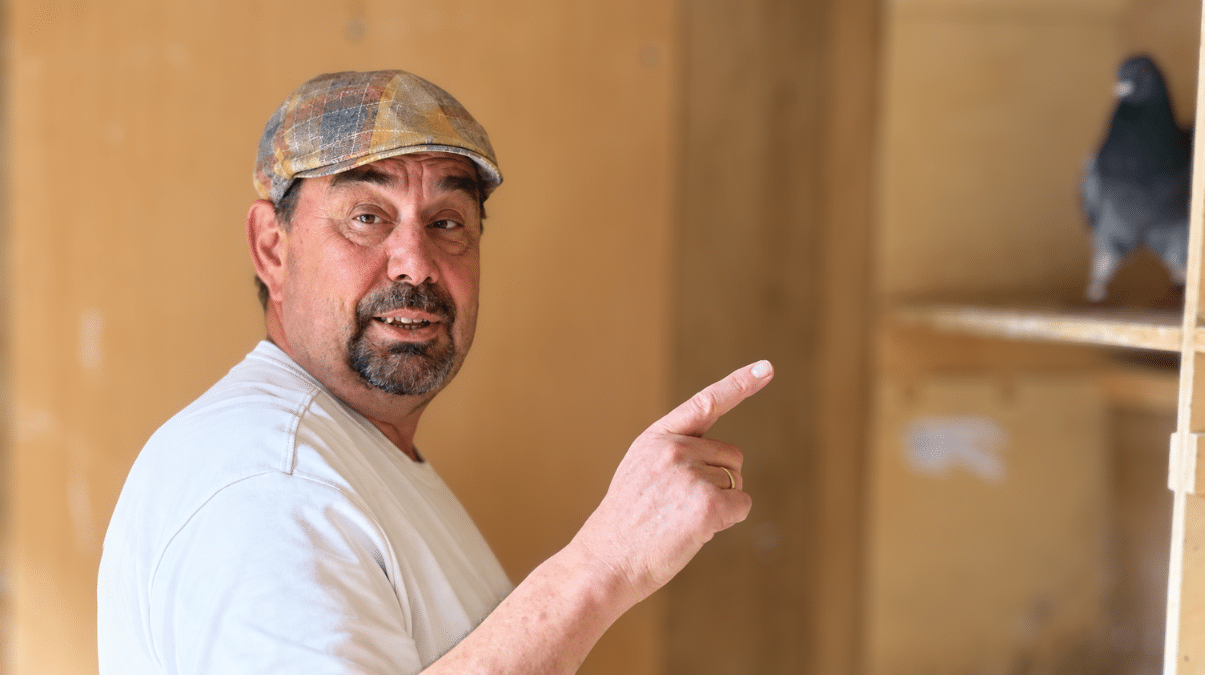
In racing pigeons we measure almost everything. Pedigree, health, training, feeding, recovery, motivation and results all receive constant attention. Yet there is another factor that is much harder to measure: the relationship between the fancier and the pigeon.
Every experienced fancier knows the difference. In one loft the birds move away as soon as somebody enters. In another they remain calm, react immediately to the feeding call and seem to know exactly what is coming next. That is more than a pleasant atmosphere. Scientific research has shown that pigeons can distinguish between individual people and remember previous interactions with them. In practical terms, your pigeons are not simply learning to live around humans. They are learning you.
Trust Is Built in the Daily Routine
Every visit to the loft teaches a pigeon something. The way you enter, the way you move, how you catch a bird, the sound you make before feeding and what happens when the basket appears all become part of a pattern. Through repetition, those moments become predictable.
That matters, because handling and restraint can cause measurable stress responses in pigeons. At the same time, pigeons can become more accustomed to repeated procedures. For the fancier, the lesson is simple: contact itself is not the problem. The way that contact takes place makes the difference.
Calm handling, consistency and predictable routines create confidence. Chasing birds around the loft, grabbing them unexpectedly or making every interaction stressful does the opposite.
A racing loft should feel controlled, not chaotic.
Trust Does Not Replace Quality
We should not turn this into another miracle theory. There is no scientific evidence that a racing pigeon flies faster simply because it has a strong emotional bond with its owner.
A moderate pigeon will not become a national winner because it is tame.
Quality still comes first. Health, loft conditions, feeding, training, recovery and motivation remain essential. But trust can help those qualities show themselves. A calm pigeon is easier to observe and easier to handle. It learns routines more naturally and behaves more normally around the fancier.
Most importantly, you begin to know what normal looks like.
That is where real loft knowledge starts.
Great Fanciers Know Their Pigeons
The best fanciers do not only see a team. They see individuals.
You know which cock is normally first at the feeder. You know how a certain hen behaves around her box. You know which pigeon is always full of fire and which one is naturally quieter.
Then one day something changes.
- Nothing dramatic.
- But you notice.
That is one of the real advantages of knowing your pigeons properly. The relationship is not only about whether they trust you. It is also about how well you understand them.
Get A FREE Weekly Plan To Victory
Discover exactly what to give your pigeons before, during and after racing. Get the complete digital schedule instantly by email and build better condition, faster recovery and stronger race performances.
Jan de Wijs – Racing Pigeon Expert
Thank you!
Your plan is on its way!
The best fanciers often see small changes before they become big problems.
The Trap Turns Trust Into Time
There is one part of pigeon racing where behaviour can directly influence the result: the trap.
A race is not finished when the pigeon lands on the loft. The electronic system still has to register the arrival. A bird that lands and walks around outside can throw away valuable seconds.
That is why trapping should never be something you start thinking about on race day.
A fixed call, whistle or feeding signal should already mean something. The entrance should be completely familiar. Going inside should feel automatic.
Home means in.
- No hesitation.
- That is not sentiment. That is training.
- And training becomes easier when the pigeon trusts both the fancier and the environment.
Start Before the Pressure Begins
Young pigeons are already learning from the first weeks in the loft.
If catching them always turns into a chase, they learn that. If the basket only appears before an unfamiliar and stressful experience, they learn that too.
But if handling, basketing, feeding and trapping become normal parts of daily life, the young pigeon gains experience before the pressure of racing begins.
That does not mean making pigeons soft or dependent. A racing pigeon must remain independent. Once released hundreds of kilometres from home, it has to navigate, make decisions and keep going without any help from the fancier.
The ideal pigeon trusts you completely inside the loft but needs you for nothing once the basket opens.
That is the balance we should be looking for.
Champions Demand the Best. So Do We.
Discover the essential supplies for winning lofts, personally tested, trusted and recommended by Pigeon Boss. Because excellence starts with the right products.
-
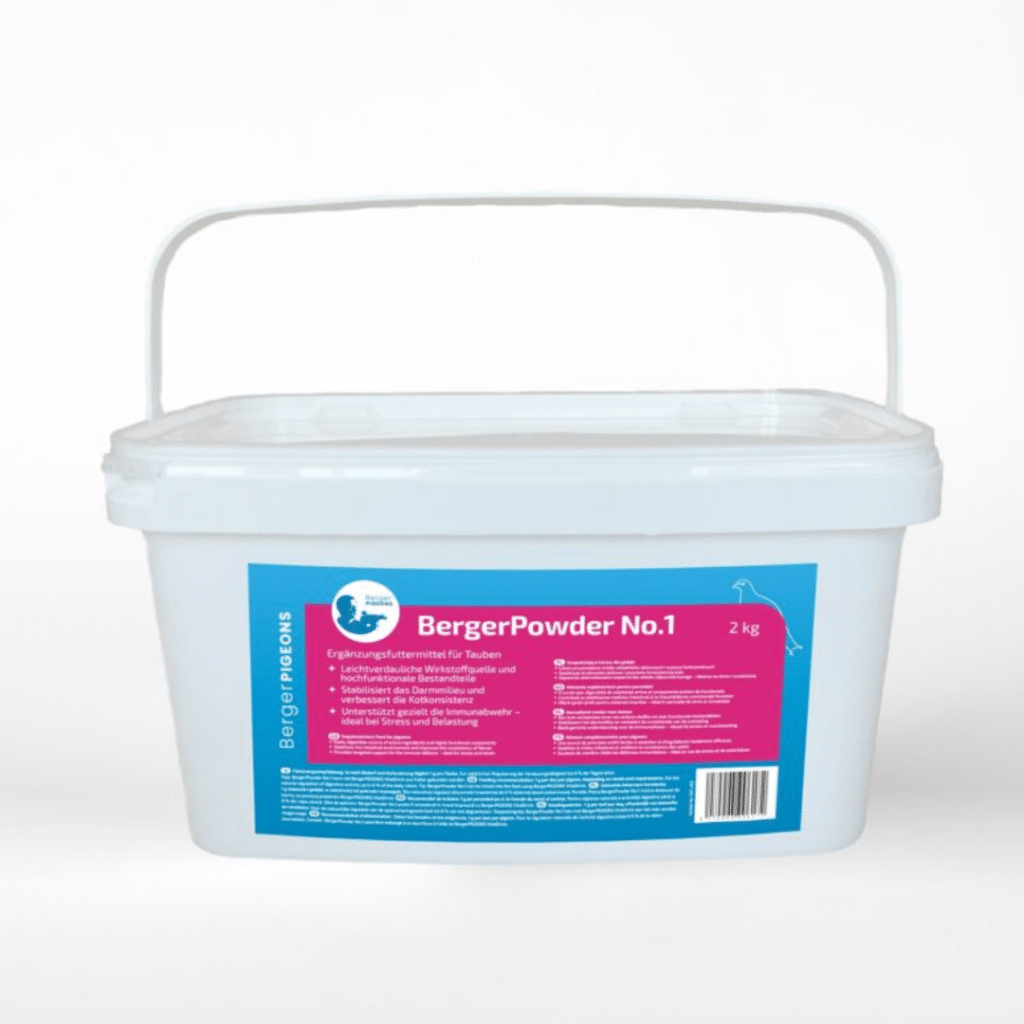
Berger Powder No.1
Active supplement with probiotics, prebiotics, colostrum, vitamins, chelates, and...€ 41,28Add to cart -

Vital Drink
Herbal liquid supplement with milk thistle, sea buckthorn, elderberry...€ 24,75Add to cart -
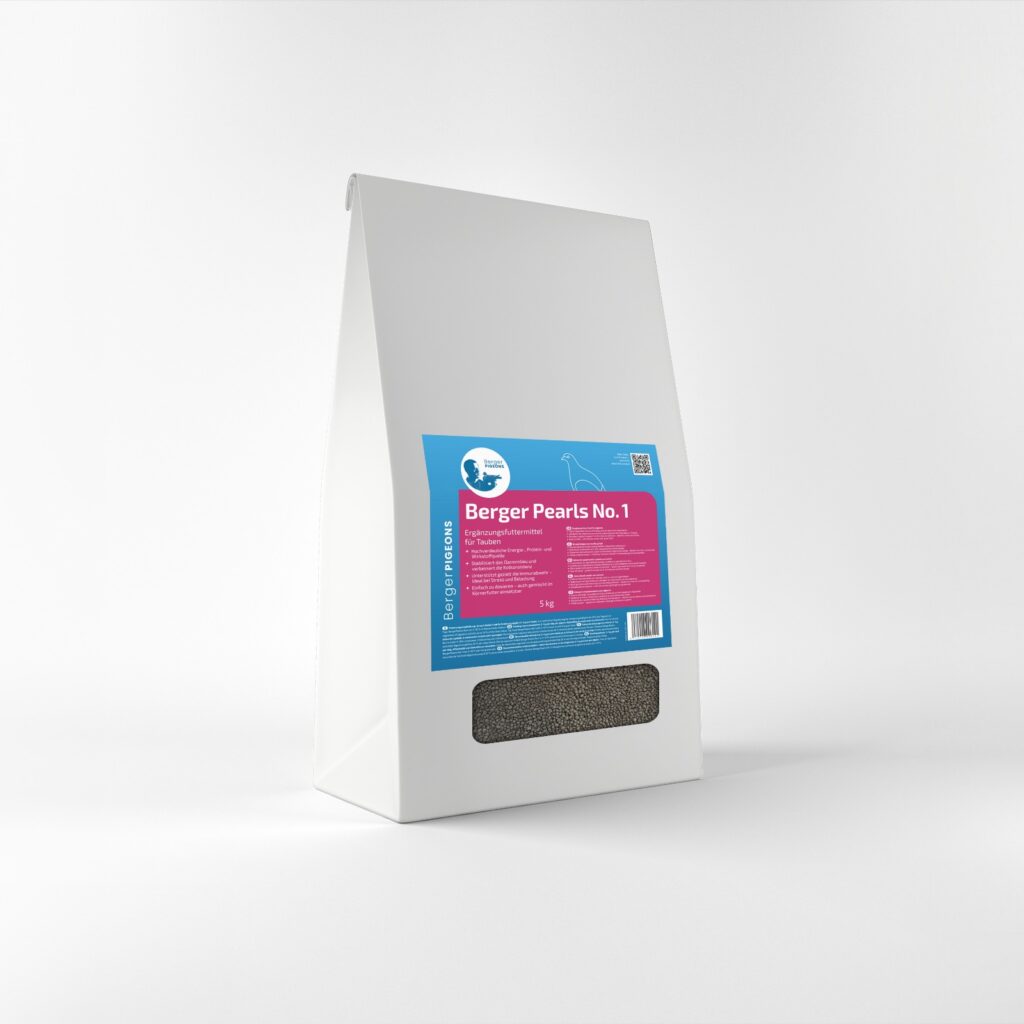
Berger Pearls No.1
Chopped peanut cores with probiotics, prebiotics, colostrum, vitamins and...€ 49,55Add to cart

The Invisible Edge
There will always be fanciers searching for the one secret that changes everything. The perfect bloodline, the perfect feed, the perfect product or the perfect system.
But real pigeon racing rarely works that way.
Championship performance is usually built from many small advantages working together. Quality pigeons, good health, the right loft, intelligent training, recovery, motivation, observation and timing.
- Trust belongs in that picture.
- Not as magic, but as management.
You can buy pigeons. You can copy feeding systems. But you cannot buy the understanding that develops when you spend enough time with your own team.
- Eventually, you know when something is right.
- You also know when something is not.
- And your pigeons know you too.
That relationship will never replace quality. But when a class pigeon feels secure in its loft, understands the routine and is managed by a fancier who notices the smallest change, you are giving that athlete every possible chance to show what is already inside.
That is the real art of pigeon racing.
Not finding one secret.
Creating the conditions in which class can fully reveal itself.
Jan de Wijs
The Pigeon Boss